
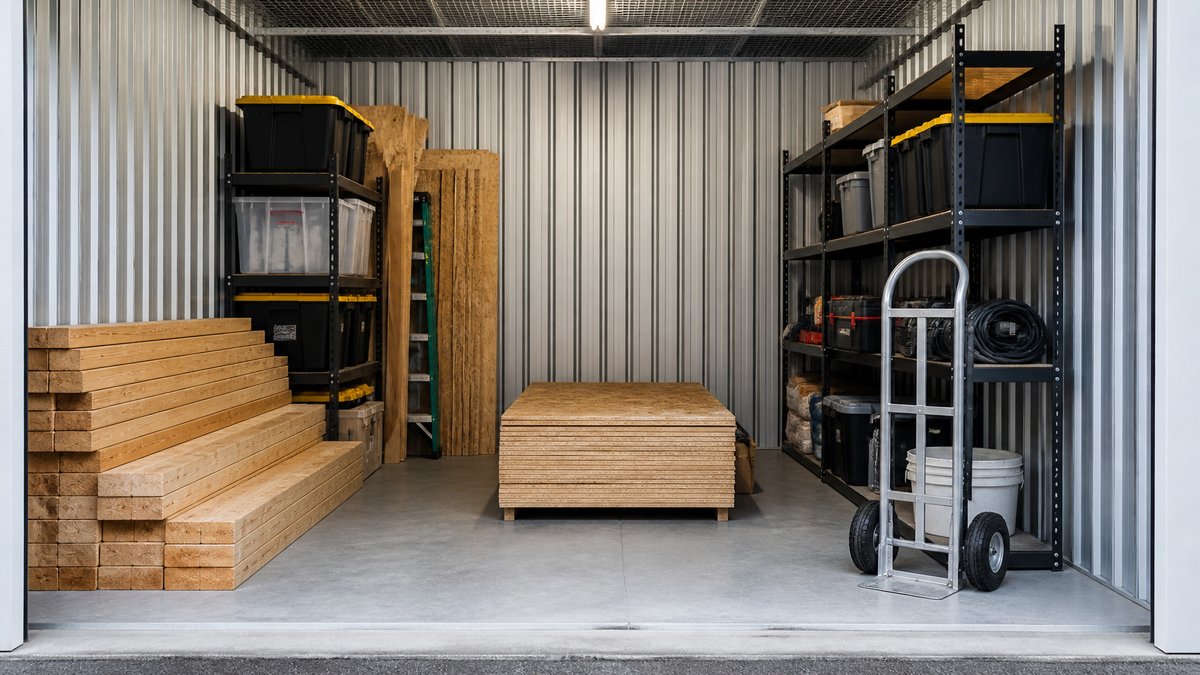
If your crew bounces between job sites in Pittsburgh, you know the routine: loading leftover materials, driving across town, unloading, then doing it again tomorrow. That back-and-forth burns fuel, eats hours, and wears out your team before the real work starts.
A storage unit between job sites can cut that loop. Instead of hauling everything back to the shop or stacking it in a trailer, you keep a working stock of materials in one place and pull what you need when you need it. The result is fewer trips and more time on the job.
Why a Central Storage Point Helps
Pittsburgh crews deal with hills, bridges, and traffic that can turn a 20-minute drive into 45. Every extra trip costs fuel and payroll. A storage unit near your regular routes lets you stage materials closer to where the work is happening. You can consolidate purchases, keep overflow out of the way, and avoid dragging a loaded trailer through rush hour.
It also keeps job sites cleaner and safer. Stacked materials and offcuts at an active site create tripping hazards and take up space you need for tools and equipment. Moving surplus to storage frees up the site and makes it easier to work.
What to Store Between Jobs
Think of the items that are reusable but not needed every day:
- Lumber and sheet goods — plywood, OSB, dimensional lumber, trim.
- Fasteners and hardware — screws, nails, anchors, brackets in bins.
- Tools and small equipment — extra saws, drills, generators, cords, and hoses.
- Job-site supplies — tarps, plastic sheeting, caulk, adhesives, safety gear.
- Fixtures and finishes — cabinets, tile, flooring boxes waiting for install.
Keep a simple inventory sheet or label bins by job. That way anyone on the crew can find what they need without digging.
Plan the Space Before You Rent
Material takes up more room than people expect, especially sheet goods and long lumber. Measure your typical load and think about how you'll move around the unit. A unit that's too tight slows you down every visit.
Use our Storage Space Calculator for a planning estimate. It adds up catalog items or custom dimensions and gives you a rough number with a 40% allowance for aisles and access. It's a planning tool, not a guarantee of fit or availability, so confirm the unit size with the location before you commit.
Practical Tips for Crews
Keep It Organized
Use shelving or pallets to get materials off the floor. Group by trade or by job. Label everything clearly. A few minutes of organizing saves an hour of searching later.
Protect What Matters
Atlas units are not climate-controlled, so plan for Pittsburgh's humid summers and cold winters. Keep moisture-sensitive items like drywall and certain adhesives off concrete floors and covered when possible. Rotate stock so older material gets used first.
Respect the Rules
A storage unit is for storage. If you need to cut, assemble, repair equipment, or run a workbench, ask the facility first. Those activities require express permission and may not be allowed. Don't assume you can turn a unit into a workshop.
Check Access and Security Details
Both Atlas locations in Penn Hills and North Hills offer 24-hour tenant access, video surveillance, and clean, well-lit facilities. That said, access is separate from office hours, so call to confirm staffed times and any details that matter to your schedule.
Gate and fencing policies, lock requirements, lease terms, and pricing aren't published here. Confirm those directly with the location you're considering. The same goes for parking or drive-up options—check the current location listing and ask what's permitted for your vehicle and materials.
Make the Switch When the Driving Adds Up
If your crew spends more than an hour a week shuffling materials between sites, storage is worth pricing out. Do the math on fuel, drive time, and payroll. Then call the Atlas location that fits your routes and confirm unit size, access, and rules.
Ready to plan? Use our Storage Space Calculator to estimate your space, then confirm the details with your chosen Atlas location.
MAKE ROOM FOR WHAT’S NEXT.
Use the calculator for a planning estimate, then confirm your needs with your location.
Check unit listings and contact the team at Penn Hills or North Hills.
Find your location →