
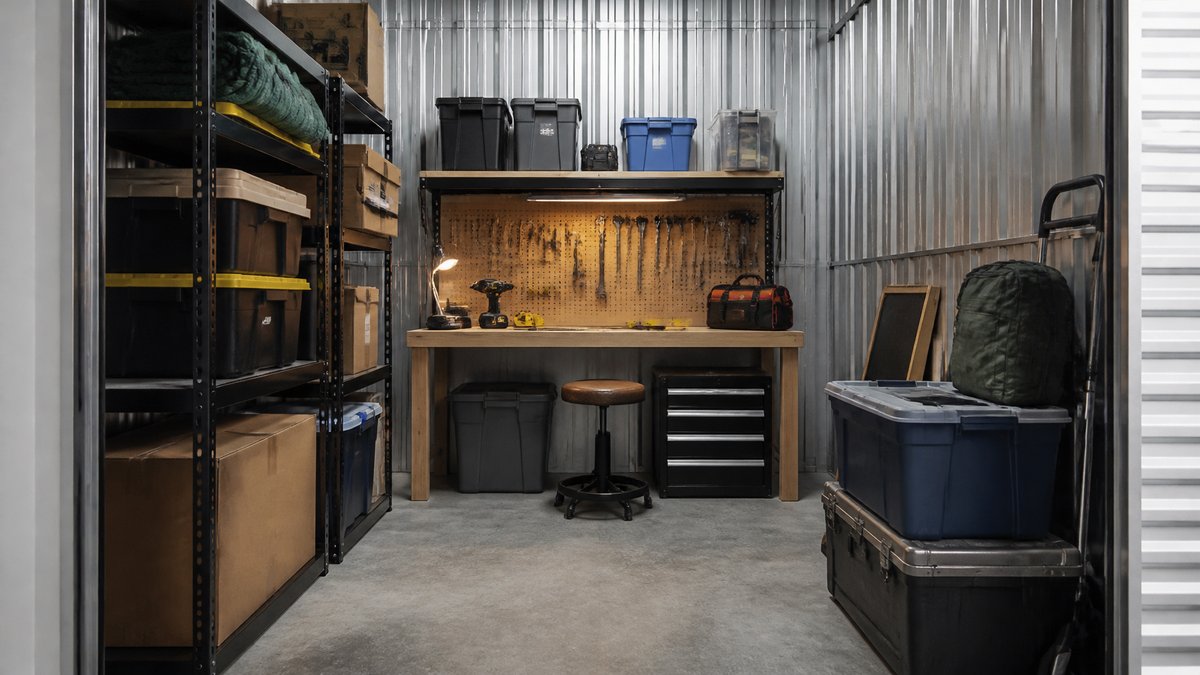
A storage unit can seem like a practical spot for a workshop, especially if you are short on garage or basement space. But before you set up a workbench and plug in a table saw, there are a few realities to understand. Not every facility allows workshop use, and the space, power, and access you need may not match what a standard storage unit offers.
At Atlas Self Storage, we have two Pittsburgh-area locations: Penn Hills and North Hills. Neither location offers climate-controlled units, so temperature and humidity will vary with the seasons. Both locations do provide 24-hour tenant access, video surveillance, and clean, well-lit facilities. However, using a unit for activities like woodworking, repairs, or running a business requires express facility permission. Do not assume a rental includes the right to operate a workshop.
Space: How Much Room Do You Really Need?
A workshop needs more than floor space for tools. You need room to move materials, stand safely, and store finished projects. A 10x10 unit might fit a small bench and a few tools, but it will feel tight once you add lumber or a shop vac. A 10x20 or 10x30 gives more breathing room, but always check the unit’s ceiling height and door width. Wide doors help with large equipment, but not all units have them.
Also consider that storage units are not designed for heavy machinery or permanent installations. Floor loading, ventilation, and electrical capacity are not guaranteed. If your work involves dust, fumes, or loud noise, a standard unit is likely a poor fit—and may violate facility rules. Ask the location directly about what is permitted.
Power: What to Expect
Most storage units do not have electrical outlets inside. Even if one is present, it may be intended for lighting only, not power tools. Running extension cords from a hallway or another unit is unsafe and typically prohibited. Generators are usually not allowed due to carbon monoxide and fire risk.
If your work requires power, discuss it with the facility before signing a lease. Some locations may have units with outlets, but you must confirm the amperage and allowed use. Battery-powered tools can be a workaround for small tasks, but you will need to charge batteries elsewhere. Never assume you can rewire a unit or add a circuit—modifications are generally not allowed.
Access: Hours and Practicalities
At Atlas, tenants have 24-hour access at both Penn Hills and North Hills, which is convenient for hobbyists who work odd hours. But access comes with responsibilities. You will likely need your own lock, and the facility may have rules about noise, hours for loud activities, and leaving materials outside your unit. Office hours are separate—call to confirm staff availability if you need help.
Keep in mind that 24-hour access does not mean a workshop is automatically allowed. It simply means you can reach your unit. If you plan to run a business, meet clients, or store hazardous materials, you must get written approval. And always confirm parking and loading areas for dropping off supplies.
Is a Storage Unit Workshop Right for You?
A storage unit can work for light, quiet activities like assembling small items or organizing tools—if the facility permits it. But for sawdust, sparks, or heavy equipment, a dedicated shop space is usually safer and more practical. If you are unsure, ask the location manager specific questions: What activities are allowed? Are there power outlets? What are the noise restrictions? Get answers before you move in.
Use our Storage Space Calculator to get a planning estimate for your storage needs, then confirm workshop rules and unit fit directly with your chosen Atlas location.
MAKE ROOM FOR WHAT’S NEXT.
Use the calculator for a planning estimate, then confirm your needs with your location.
Check unit listings and contact the team at Penn Hills or North Hills.
Find your location →